



Ad serving is the process of selecting an ad, delivering it to a website or app, displaying it to the user, and recording the impression. The ad server handles all of this behind the scenes.
So why should a media planner care about what happens in the background? Because ad serving is one part of a much wider programmatic supply chain where inefficiencies can quietly eat into media value. The ANA estimates that $26.8 billion in global media value is lost annually across that supply chain.
Yes, ad serving is not responsible for all of that waste, but it is where many costly problems arise: ads fail to load, platforms report different impression totals, and serving fees may be charged more than once.
We have seen these issues in real campaigns. In one client verified test covering 5.5 million impressions, changing the serving setup reduced serving-related costs substantially. More on that later.
This guide is written for media planners and digital campaign managers, who plan and oversee campaigns at agencies and brands. Everything below explains the ad-serving chain without burying you in technicality.
What is ad serving in practice?
Although the definition of ad serving might sound technical, it is actually not that difficult to understand. Simply put, it is the process of using software to place advertisements across different websites. Along the way, several other processes also take place, including ad rotation, display and tracking.
To make it even easier to understand, imagine you visit a website. The page loads and shows you an ad along with the rest of the content. But before that ad appears, a very quick process takes place.
The website has an ad tag in its code. When you open the page, your browser runs this code and sends a request to the ad server. The ad server reads the instructions in the ad tag and sends back the most fitting ad. Finally the website displays it to you.
All of this happens in milliseconds, between the moment the website starts loading and the moment you see the ad.
What does the ad server actually do?
At the centre of the ad serving process is an important piece of technology: the ad server. Like many technologies, it is easier to understand when we compare it to something from everyday life, in this case, a postal sorting centre.
A postal sorting centre receives a package, checks where it needs to go and sends it to the right destination. An ad server works in a similar way. It receives a request, checks the information that comes with it and decides which ad should be sent back to the website. So, in this comparison, the postal sorting centre is the ad server.
To make that decision, the ad server considers information such as:
- campaign dates
- targeting settings
- placements
- available creatives
- campaign priorities
- pacing and frequency rules
These instructions help determine which ad should be served and when. But the ad server’s job does not end once the ad is delivered. It also records what happened, including impressions, tracked clicks, which creative, campaign and placement were served, and overall delivery totals.
This data is particularly important for media planners. It provides a record of campaign delivery and is used for reporting, billing, pacing and troubleshooting. It can also help identify and investigate discrepancies when delivery numbers differ between platforms.
Why do ad-serving numbers differ?
Even when two systems are measuring the same campaign, their totals aren’t necessarily identical. That doesn’t automatically mean one is wrong. We’ll explain why below.
Differences can come from where each platform counts an impression, reporting time zones, filters, metric definitions, invalid traffic, tag setup or latency between systems. For example, one platform may record the impression when the ad is requested, while another records it later in the loading process.
At Nexd, we regularly investigate these kinds of discrepancies across live campaigns. Small differences are often expected, while larger gaps can point to issues with tracking, inventory, compatibility or campaign setup. If you are troubleshooting a campaign, see our guide to identifying and solving data discrepancies.
Publisher vs advertiser ad servers
Ad servers come in various types, each catering to specific needs within the digital advertising ecosystem. There are the two main types of ad servers- first-party and third-party ad servers. There are a few subtypes like mobile ad servers, display ad servers, local ad servers, etc.
Publisher ad servers:
- Used by publishers to manage their ad spaces and sell their ad inventory.
- Allow publishers to sell ad slots to advertisers directly.
- Offer features such as location and device targeting, key-value targeting, and ad management.
Advertiser ad servers:
- Used by advertisers and agencies to deliver and optimize their ad campaigns.
- Provide features such as impression tracking, viewability measurement, and real-time bidding.
What does ad serving cost?
Ad serving costs are associated with the actual running of an ad and can include the following fees:
Ad server fees:
These charges arise from selecting the ad displayed on a website, app, or digital platform. It covers the fundamental functionality of delivering and optimizing online advertisements.
3rd party tracking fees:
Costs associated with using third-party services for tracking the performance of advertisements.
Publisher ad server fees:
Charges from selecting the ad to be displayed on a website, app, or digital platform.
Advertiser ad server fees:
Fees associated with the delivery and monitoring of ads by the advertiser.
Advanced ad serving fees:
These are additional fees for advanced ad formats, such as dynamic display, video, and audio creatives, charged on top of the basic ad-serving fee.
When ad serving becomes a duplicate cost
Ad serving often appears in a media plan as just another CPM fee. But it is worth checking what that fee actually covers — and whether another technology partner in the campaign is already providing it.
We saw the impact of this in a case study we did covering 5.5 million impressions. A global FMCG advertiser moved the serving layer for a video campaign to Nexd while keeping the media buy with its DSP. The result was a 58% saving compared with traditional DSP serving, while measurement between the two systems differed by only 0.08%.
Seven common ad-serving problems and how to investigate them
At Nexd, ad serving is something we deal with every day. Based on that hands-on experience, here are seven common ad-serving problems and the first things we recommend checking.
| Symptom | First checks | Likely owner | Evidence needed |
| No impressions | Dates, eligibility, approval and targeting | Media or publisher ad ops | Delivery status and screenshots |
| Campaign underdelivers | Pacing, frequency, targeting and bid | Media team | Daily placement report |
| Ad slot appears but creative does not | Tag, macros and asset requests | Creative or ad ops | Test page and browser logs |
| One device or app fails | Format and SDK compatibility | Publisher or app team | Device, OS and SDK versions |
| Publisher count is higher | Counting point and creative loading | Both ad-ops teams | Placement-level reports |
| Clicks are missing | Click macro and redirect chain | Creative or ad ops | Click-test results |
| Creative loads slowly | Asset weight and request chain | Creative team | Load timing and asset sizes |
Don’t pay extra for ad serving
With Nexd creatives, you can save on ad serving costs.

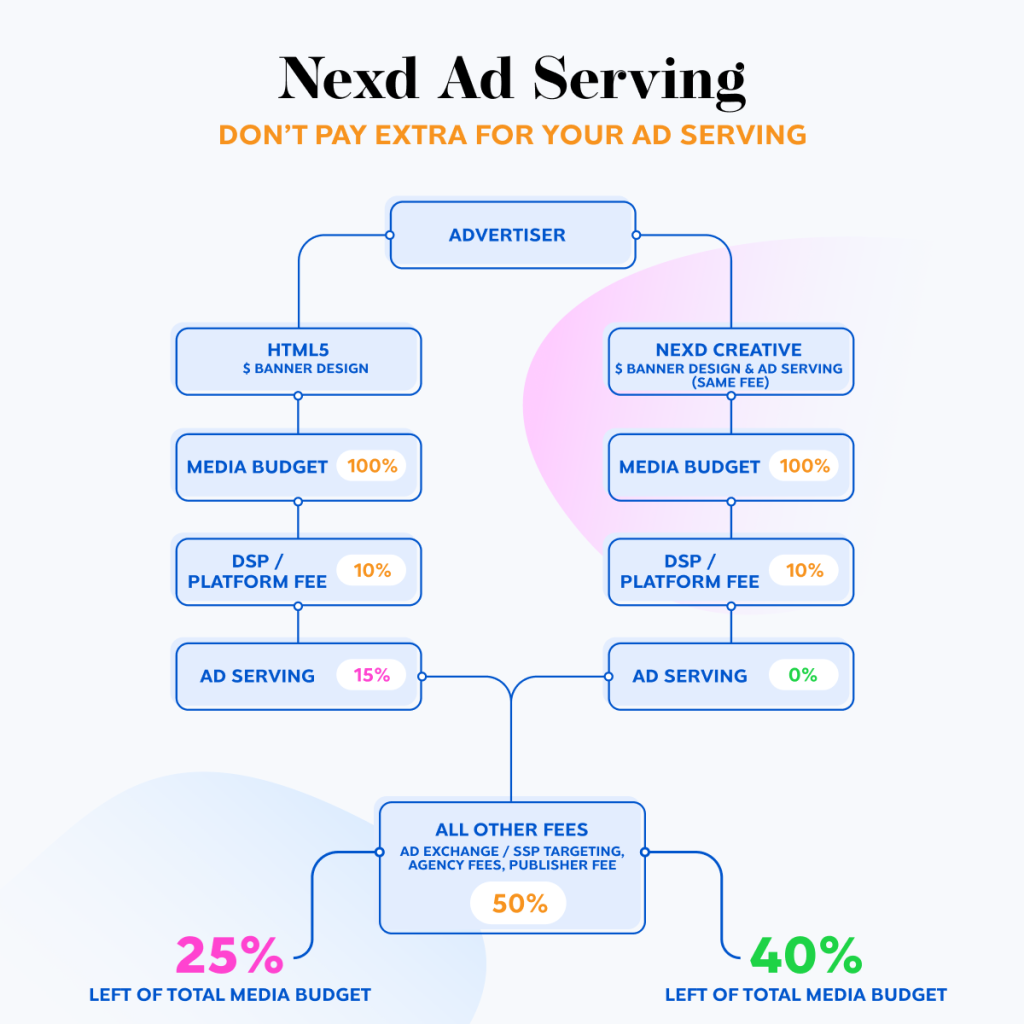
Ad serving is already included in all creatives exported from Nexd Campaign Manager. If your media plan has a specified fee for ad-serving, delete that row and do not add it extra on the DSP you are using.
What is an ad serving vs ad tracking?
| Ad Serving | Ad Serving | Ad tracking |
|---|---|---|
| Definition | The process of delivering digital ads to users. | Monitoring and recording user interactions with ads. |
| Primary Function | Manages the delivery and display of ads. | Records and analyzes user interactions with ads. |
| Tasks Involved | Selecting ads from the inventory. Delivers ads to users’ browsers or apps. Ensure timely and accurate ad display. | Counting ad impressions (views). Tracking clicks on ads. Monitoring conversions (user actions). |
| Timing | Primarily concerned with the display process. | Ongoing process focusing on user interactions. |
| Tools Used | Ad servers, which manage ad delivery. | Tracking tools and technologies for data collection. |
| Creative Optimization | Ad serving lets advertisers control and change their ads easily. They can make adjustments whenever they need without waiting for the publisher. | In ad tracking, the publisher has all the control over the ads. Advertisers must rely on the publisher if they want to make any ad changes. |
| Data Collection | Data on ad impressions, clicks, and delivery efficiency. | Data on user interactions, click-through rates, and more. |
Wrapping it up
Choosing the correct ad server is crucial for both publishers and advertisers. Ad serving is an essential and cost-effective solution to efficiently get your ads out there.
Nexd provides an efficient solution and offers the latest programmatic monetization technologies without additional expenses. Nexd With Nexd’s ad-serving capability, you save money and contribute to a greener environment by reducing your carbon footprint.
Try Nexd today and experience the benefits of a reliable creative management platform with ad-serving capabilities.

Get Started
Sign up to Nexd Campaign Manager for a free 14-day trial and start creating environment-friendly and highly engaging programmatic creatives!