

Ad fatigue is a common challenge for digital marketers running display ad campaigns. It occurs when your target audience becomes less responsive to your ads due to repeated exposure. Let’s explore what causes ad fatigue and how you can combat it effectively.
What is Ad Fatigue?
Ad fatigue happens when your audience sees your ads so frequently that they become bored or annoyed by them. This leads to decreased engagement, lower click-through rates, and reduced campaign performance. A persistent myth is that an average American sees up to 10,000 ads per day, in reality it is more in the range of 100-300 but that’s enough for ad fatigue to set in quickly because most of them are forgettable.
Ad fatigue is not just a minor inconvenience; it’s a significant issue that can severely impact your marketing efforts. When users become desensitized to your ads, they may start to actively ignore them, a phenomenon known as “banner blindness.” This cognitive filtering mechanism can make your ads virtually invisible to your target audience, wasting your ad spend and reducing the effectiveness of your campaigns.
Signs Your Audience Has Ad Fatigue
The tricky thing about ad fatigue is that it creeps up gradually. One week your campaign is humming along nicely, and the next you’re staring at performance charts that look like they’ve fallen off a cliff. Here’s what to watch for:
- Declining click-through rates (CTRs)
- Lower engagement metrics like likes, shares, and comments
- Decreased impressions and reach
- Reduced conversion rates and return on ad spend (ROAS)
These signs are not just isolated metrics; they’re interconnected indicators of your audience’s waning interest. For instance, a drop in CTR often correlates with a decrease in conversions, as fewer people are interacting with your ads. Similarly, reduced engagement on social media platforms can signal that your audience is becoming less receptive to your messaging. It’s crucial to monitor these metrics holistically to get a comprehensive view of your campaign’s health.

Get started
Sign up to Nexd Campaign Manager for a free 14-day trial and start creating environment-friendly and highly engaging programmatic creatives!
Common Causes of Ad Fatigue
- Lack of variety in creative elements
- High frequency of ad exposure
- Extended campaign runtime without refreshing content
- Information overload from too many ads in general
The causes of ad fatigue are often interrelated. For example, a lack of variety in creative elements can exacerbate the effects of high-frequency exposure. When users see the same ad repeatedly without any changes, they’re more likely to tune it out. Similarly, running a campaign for an extended period without refreshing the content can lead to audience boredom, especially in today’s fast-paced digital environment where trends change rapidly. It’s worth noting that 91% of people believe ads are more intrusive now than before, highlighting the importance of addressing these causes proactively.
Strategies to Combat Ad Fatigue
1. Monitor Campaign Performance Closely
Track key metrics like frequency, CTR, and engagement rates to identify when ad fatigue begins to set in. Use analytics in the DSP you use to gain deeper insights into ad performance. These platforms can provide real-time data on how your ads are performing across different segments and channels. By closely monitoring these metrics, you can spot early signs of ad fatigue and take corrective action before it significantly impacts your campaign’s performance.
Also consider setting up automated alerts for sudden drops in engagement or CTR to ensure you can respond quickly to any changes.
2. Refresh Creatives Regularly
Update your ad visuals, messaging, and formats to keep content fresh. Consider using dynamic creative optimization to automatically serve the best-performing creative elements. Regular refreshes can help maintain audience interest and prevent the onset of ad fatigue.
When updating your creatives, consider incorporating current events, seasonal themes, or trending topics to make your ads more relevant and timely. However, be careful not to stray too far from your brand identity or core message. The goal is to keep your ads fresh while maintaining consistency in your overall brand communication. Also remember: a full redesign isn’t always needed. Micro-updates (new background colour, refreshed headline, updated image) often reset user attention effectively.


3. Segment and Personalize
Generic ads tire audiences faster. The more relevant and personalised your creative, the longer it stays fresh. Segment by intent: tailor messaging to new visitors, warm leads, and retargeting audiences based on where they are in the funnel. Segment by demographics: a London audience might respond to different creative than a Manchester audience. Segment by behaviour: differentiate messaging for past purchasers, cart abandoners, and browsers. And segment by device: mobile users respond better to vertical video and thumb-friendly interactions, while desktop users can handle more complex rich media formats.
Use DCO to serve personalised creative variations based on real-time data like weather, location, and time of day; user data such as browsing history and past purchases; and contextual signals including content topic and device type. An ad for outdoor gear might show winter coats to users in Scotland in January, but highlight waterproof jackets to users in London during a rainy forecast.
4. Rotate Ad Content
Prepare multiple creative variations and rotate them throughout your campaign. This helps maintain audience interest and allows you to test different approaches. Ad rotation is not just about swapping out images or copy; it’s about presenting your message in different ways to keep it fresh.
For instance, you might alternate between product-focused ads and lifestyle-oriented ads, or between static images and video content. This variety can help combat ad fatigue by presenting your brand in different contexts and appealing to different aspects of your audience’s interests. Additionally, rotating content allows you to gather data on which types of ads perform best with different segments, informing your future creative strategies.
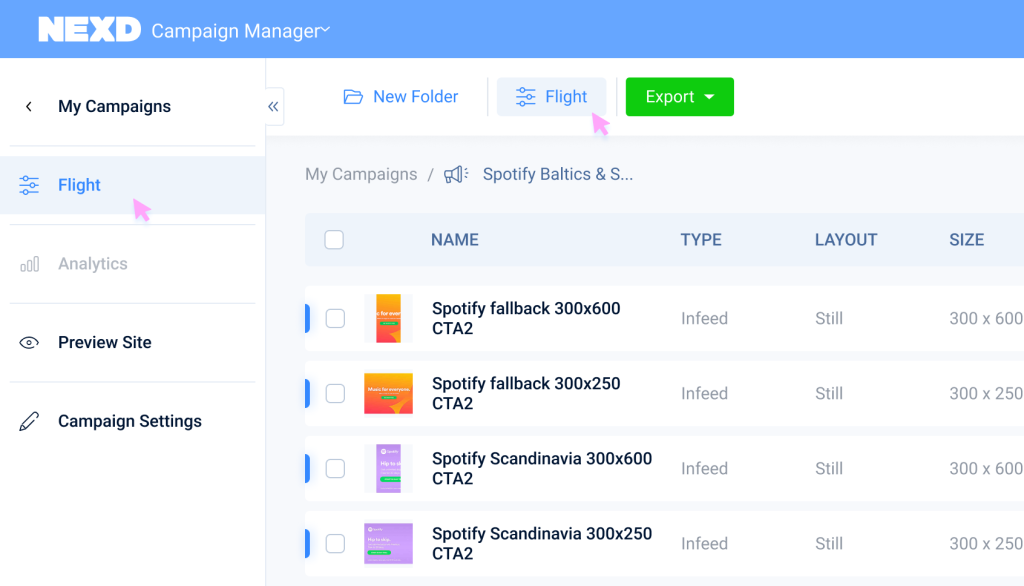
You can try Nexd’s Flights feature to make this process easy and cut out the need for manual changes.

5. Adjust Campaign Settings
Fine-tune targeting parameters and ad frequency caps to prevent overexposure to the same users. Be mindful of retargeting practices to avoid annoying potential customers. Frequency capping is particularly important in preventing ad fatigue. While there’s no one-size-fits-all approach, a general rule of thumb is to limit ad exposure to 3-7 times per user over a 30-day period. However, this can vary depending on your industry, product, and campaign goals.
It’s also crucial to set appropriate exclusion periods for users who have already converted or taken a desired action to avoid unnecessary ad exposure.
6. Leverage Interactive Ad Formats
Explore engaging ad types like mobile interstitial ads or rich media formats to capture audience attention in new ways. Interactive ads can significantly boost engagement and reduce ad fatigue by providing a more immersive and enjoyable user experience. These formats can include features like mini-games, quizzes, or product configurators that encourage active participation from the user. By making the ad experience more engaging and memorable, you can combat ad fatigue and potentially increase brand recall and conversion rates.
7. Optimize for Mobile
With increasing mobile usage, ensure your ads are mobile-friendly and optimized for smaller screens. Mobile optimization goes beyond just resizing your ads; it involves rethinking your entire ad strategy for the mobile context. This includes considering factors like load time, touch-friendly interfaces, and vertical video formats. Mobile users often have shorter attention spans and are more likely to experience ad fatigue, so it’s crucial to make your mobile ads concise, visually appealing, and easy to interact with on a small screen.
Common Mistakes to Avoid
Even experienced media traders fall into these traps.
Waiting Too Long to Rotate: Don’t wait until CTR crashes. Plan rotation before launch, and stick to the schedule even if performance seems fine.
Over-Relying on Frequency Caps Alone: Frequency caps prevent overexposure, but they don’t solve creative staleness. You need rotation and caps.
Ignoring Mobile Optimisation: If your ads look great on desktop but terrible on mobile, you’re fatiguing half your audience instantly.
Rotating Without Testing: Don’t just swap creatives blindly. A/B test to understand why one performs better, so you can apply those learnings to future creatives.
Tools and Platforms to Simplify Ad Fatigue Management
Managing all of this manually is exhausting. Here’s how to make your life easier.
Nexd Campaign Manager lets you build interactive, lightweight ads in minutes with drag-and-drop, includes built-in DCO via the Flights feature and Creative Optimisation Tool, and integrates with all major DSPs. Google Ads Creative Studio provides a free baseline tool for basic display and video, though it creates heavier HTML5 files.
For analytics and automation, use DSP dashboards like DV360 or The Trade Desk for built-in frequency management, performance tracking, and automated rules. Third-party analytics platforms like Looker or Tableau let you build custom dashboards to visualise fatigue signals across campaigns. And A/B testing tools – native ad platform tests or platforms like Optimizely – help you refine creative continuously.
One often-overlooked factor in ad fatigue: slow-loading ads. Users don’t just ignore heavy, laggy creatives – they actively resent them. Nexd’s rich media ad server delivers ads that are 5–10 times lighter than standard HTML5, load twice as fast, and run on renewable energy – so you’re reducing both ad fatigue and your campaign’s carbon footprint.
Conclusion
By implementing the above strategies, you can keep your display ads fresh, relevant, and engaging for your target audience. Remember to continually test and refine your approach to combat ad fatigue effectively and maximize your campaign performance. Ad fatigue is an ongoing challenge in digital marketing, but with careful monitoring, creative thinking, and a willingness to adapt, you can maintain the effectiveness of your display ad campaigns and continue to reach and engage your target audience.
Get started
Sign up to Nexd Campaign Manager for a free 14-day trial and start creating environment-friendly and highly engaging programmatic creatives!