

Interactive rich media drove 3x the CTR vs standard display


In a LATAM campaign for the film Mickey 17, mediasmart ran standard display and Nexd interactive formats side by side, on the same inventory and at the same CPM. The interactive formats earned close to three times the click-through rate.
A movie poster works hard for its space. It has a face you recognise, a title, a date, and it invites a click. Interactive ads work differently: they ask the viewer to do something, scratch, flip or slide, and then pay it off with the content, in this case the trailer. That small exchange taps into something deep in how we are wired to notice and respond, but more on the psychology and physiology of that at the end.
This campaign put that difference to the test in the cleanest way possible: by changing nothing about the media, and only changing what the creative asks of the viewer.
Background
mediasmart, the omnichannel advertising platform of the Affle Group, ran the Mickey 17 campaign across mobile web and in-app inventory, targeting audiences by their affinity for Adventure, Action, Comedy and Sci-Fi, with a focus on men 25+ and women 17–34. This approach reached movie audiences at scale while keeping relevance high throughout the consumer journey.
Within this campaign, mediasmart ran two kinds of creative: static standard display, and interactive rich media built with Nexd. Running them together, under the same conditions, made it possible to measure exactly what interactivity adds.
The setup
The campaign compared static standard display creatives against Nexd interactive rich media formats, all inside the same campaign so the only real difference was the creative format itself. Because both ran together, the comparison isolates the one thing that changed.
Conditions held equal
- Inventory: the same regular display line items for both. The rich media was not bought on video or outstream inventory.
- CPM: the same for both formats. A rich media 300×250 and a standard 300×250 ran at the same rate, in the same range as a regular display CPM, with no video premium.
- Targeting & channel: the same mobile audience segments, in the same campaign.
The rich media formats
Three Nexd interactive layouts were used: Scratch, Flip and Slide. Each one invites the viewer to act, with the movie content revealed as the payoff of that interaction, most directly scratching away to uncover the trailer. They sit alongside a wider set of interactive layouts, from carousel ads to expandables, that all turn a passive impression into a deliberate action.
See it for yourself
First, the standard display creative that ran in the campaign. Then the three live Nexd formats. The interactive ones are real, so go ahead and scratch, flip and slide them.
The standard display creative
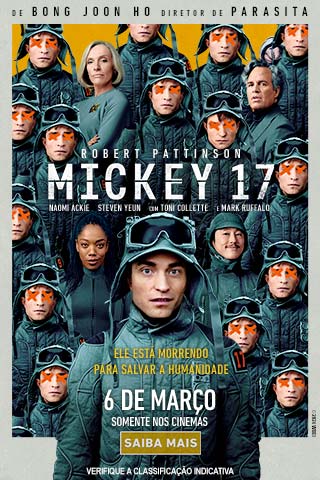
This is the kind of static creative the campaign ran against: a polished poster that tells you the film is in cinemas and invites a click.
The interactive formats
The same campaign ran three Nexd interactive formats. Each one asks the viewer to do something, and pays it off with the movie content.
Scratch
The Scratch unit asks you to clear the surface and reveal the trailer underneath. The reveal is the reward, and the reward is the content itself.
Loading interactive ad preview…
Flip
Flip works like turning a page: the viewer flips the creative to the next panel, a small act that turns a glance into a moment of contact.
Loading interactive ad preview…
Slide
Slide plays the trailer after the interaction, on the same inventory a static banner would have run on.
Loading interactive ad preview…
The results
With everything else held equal, the interactive formats delivered close to three times the click-through rate of standard display, while holding viewability at the same level.
| Format | Average CTR |
|---|---|
| Interactive rich media (Nexd) | 3.65% |
| Standard display | 1.27% |
Rich media averaged 3.65% CTR against 1.27% for standard display, close to three times the engagement from the same media buy.
Viewability held level
| Format | Average viewability |
|---|---|
| Interactive rich media (Nexd) | 72.53% |
| Standard display | 71.47% |
Viewability was effectively the same across both. The much higher engagement came with no viewability trade-off.
Why interactive formats win on CTR
The gap is not a matter of one creative being prettier than another. It comes from two separate things happening in the viewer, and standard display can only do the first one weakly.
First, movement captures the eye before the viewer decides to look
Human vision has dedicated machinery for detecting motion, anatomically separate from how we process colour or shape. We know this because people with motion blindness (akinetopsia) can have normal vision for everything else yet cannot perceive movement at all, which shows motion is its own processing channel (Royal Society, on visual salience). This system lives mostly in peripheral vision: sudden movement at the edge of sight is detected and pulls the eye toward it automatically, before any conscious decision (Cosman & Vecera, 2010). This is the orienting reflex, and it is fast and involuntary. A static banner gives this system nothing to react to.
But motion alone is not enough, and that matters
This is what separates a good interactive ad from an annoying flashing banner. Movement only holds attention when it points to something. Think of someone waving to get your attention versus a light flickering in the corner: you turn toward the wave because it signals where to look, and you learn to tune out the flicker because it leads nowhere. Research shows the same thing with motion on screen, it guides attention efficiently when it reliably marks where the relevant thing is, but stops drawing the eye when it has no connection to anything worth looking at (Hillstrom & Yantis). The brain actively learns to suppress movement that is just noise (Folk, Remington & Johnston). So a banner that animates for its own sake gets filtered out, while a scratch or a flip earns attention because the motion leads straight to the payoff. The movement has to mean something.
Second, doing something beats watching something
Capturing the eye gets attention. Earning the click takes more. When a viewer scratches, flips or slides, they stop being a passive audience and become an active participant. Active processing encodes far more strongly than passive viewing: eye-tracking work on in-app ads found that task-integration drove memory more effectively than passive visual salience, even overriding raw fixation time (Where Vision Meets Memory, 2025), and attention studies report that actively-attended ads drive up to three times the recall and purchase intent of passively-viewed ones (Amplified). A static creative cannot offer this. There is nothing to do, so it can only be received.
Why these specific formats worked
The lift is not automatic. The evidence on interactivity is mixed when it is added for its own sake: a systematic review found no consistent gain from simply adding more interactive features, and high-arousal formats can even get in the way of the message. The win comes from interaction that is contextual, where the action and its reward fit the content. Here, Scratch, Flip and Slide all resolve into the movie itself, most directly scratching away to reveal the trailer. The movement is meaningful, so it survives the brain’s noise filter, and the action is rewarding, so it converts attention into a click. That combination is what standard display cannot reproduce, and it is what shows up in the CTR.
The takeaway for media buyers
The most useful finding is not only that interactive formats performed better. It is that they did so on the same standard display inventory, at the same CPM. There was no move to premium video inventory and no media-cost premium.
For planners, that reframes the trade-off. Engagement of this kind is often assumed to require video budgets. Here, interactive display delivered the lift while keeping the efficiency of a standard display buy. More performance from the same spend. (For more on how to measure this, see our guide to engagement and attention metrics.)
In partnership
Nexd is like a rich forest, you have great trees, but you need to know how to build a house with them. There’s so much to explore, and I’d like to discover it.
mediasmart and Nexd continue to collaborate on creative formats and performance studies across LATAM.
Get started
Sign up to Nexd Campaign Manager for a free 14-day trial and start creating environment-friendly and highly engaging programmatic creatives!